
The Art of the Pivot: Essential Adaptability Skills for Hospitality Pros
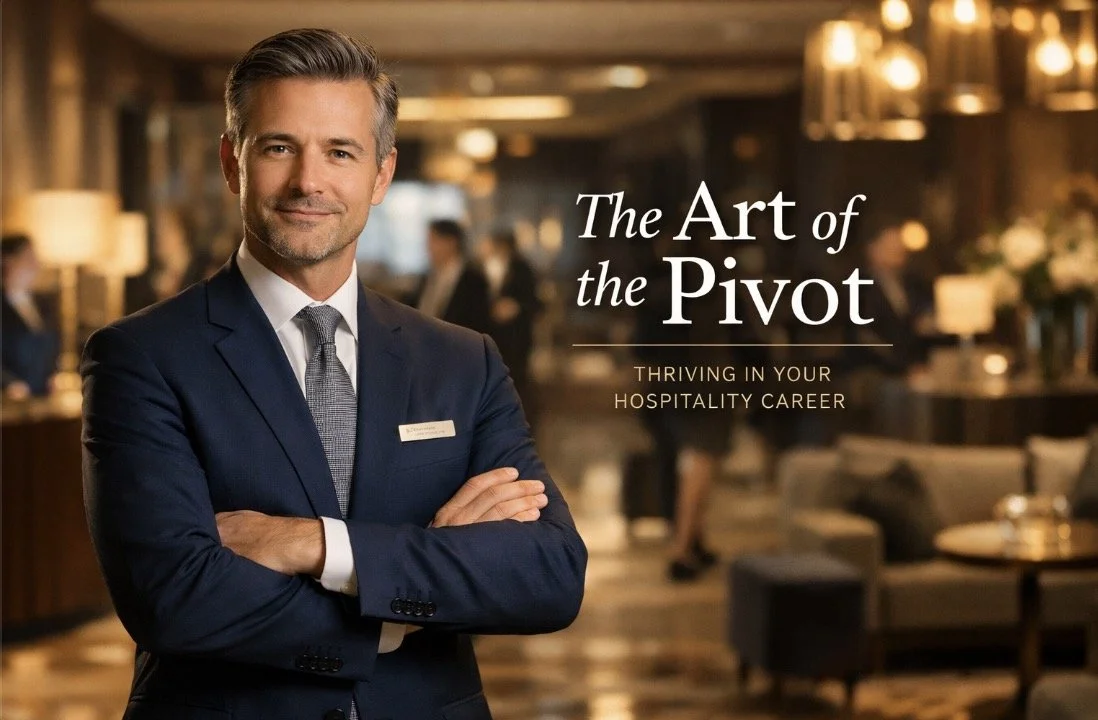
Hospitality has always rewarded people who can think on their feet. But in 2026, adaptability isn’t just a “nice trait” anymore, it’s a career strategy.
Because the people who get promoted aren’t only the ones who work hard. They’re the ones who stay effective when things change: new systems, new standards, new guest expectations, staffing gaps, sudden VIPs, last-minute group requests, or a manager who needs you to cover a different role, today.
Adaptability is how you stay valuable. And value is what creates career momentum.
Adaptability ≠ “going with the flow”
A lot of professionals misunderstand adaptability as being agreeable, quiet, or endlessly flexible. That’s not it.
Real adaptability is:
Staying calm under pressure
Adjusting your approach without losing quality
Learning faster than the change around you
Making yourself useful in more than one scenario
Thinking “What does the guest/business need right now?” and responding with intent
It’s a skill. And like any skill, it can be built.
Why adaptability leads to promotions (even when you’re not the loudest)
In hotels and restaurants, leaders are constantly solving 20 small problems a day. So when they consider who to trust with more responsibility, they look for someone who:
Reduces chaos instead of adding to it
Handles grey areas (not just routine tasks)
Learns quickly when the playbook changes
Supports the team across departments, not just their own lane
Adaptability signals maturity. It tells management: “This person can handle more.”
And for entry–mid level professionals, that’s often the difference between:
being seen as “good at the job”
vsbeing seen as “ready for the next job”
The micro-skill that changes everything: The 5-second pause
When something changes suddenly (angry guest, system down, overbooking, kitchen delay), the worst mistakes happen in the first emotional second.
Try this:
Before you react, take a 5-second pause.
In those 5 seconds:
Relax your shoulders
Breathe once, slow
Ask: “What outcome do we need here?”
Choose your next sentence on purpose
This simple habit does two things:
It improves your decision-making
It makes you look like leadership material (because calm is contagious)
Pro tip: Pair it with a default line you can always use:
“Give me one moment — I’m going to sort this out properly for you.”
Cross-training: the fastest route to becoming “promotion-proof”
If you want to become hard to replace (in a good way), don’t only master your job. Master adjacent jobs.
Cross-training isn’t extra work. It’s leverage.
Examples of cross-training that pays off fast:
Front Office associate learns basics of reservations + pre-arrival planning
Restaurant supervisor learns banquet flow + event timelines
Housekeeping team leader understands room inventory and VIP setup standards
Guest Relations executive learns complaint documentation + service recovery SOPs
Why it matters:
You become the person who can cover gaps
You understand how the hotel really runs
You communicate better with other departments
You start thinking like a supervisor before you get the title
One simple move: Ask your manager:
“Can I shadow one shift a month in a related department? I want to understand the full guest journey.”
6 practical ways to build adaptability (without burning out)
1) Build “one new skill per quarter”
Not 10. Just one.
Examples: Opera basics, upselling scripts, complaint handling, Excel for rosters, wine knowledge, event orders, audit basics.
2) Keep a “wins + lessons” note
Every week, write:
1 win you’re proud of
1 situation you’d handle better next time
3) Learn the “why” behind SOPs
When you understand why a standard exists, you can adapt it intelligently — without breaking it.
4) Practice scenario thinking
Ask yourself:
“If we are short-staffed today, what are the top 3 actions that protect guest experience?”
5) Upgrade your language
Use:
“Here’s what I can do right now.”
“Two options: best one is…”
“Let me confirm and get back in 3 minutes.”
6) Make feedback your advantage
After a tough shift, ask a senior:
“What’s one thing I should repeat next time, and one thing to change?”
Try this this week (small, powerful actions)
Pick any one:
Use the 5-second pause in your next difficult moment
Ask for one cross-training shadow shift this month
Learn one mini-skill: “How we handle VIP pre-arrivals” or “How a complaint becomes a recovery”
Write your wins + lessons note at the end of your next week
Do it consistently, and you’ll notice something: you won’t just survive change. You’ll start using it to move ahead.